How to Calculate Percentage Increase and Decrease
Learn something new today
What Is Percentage Change?
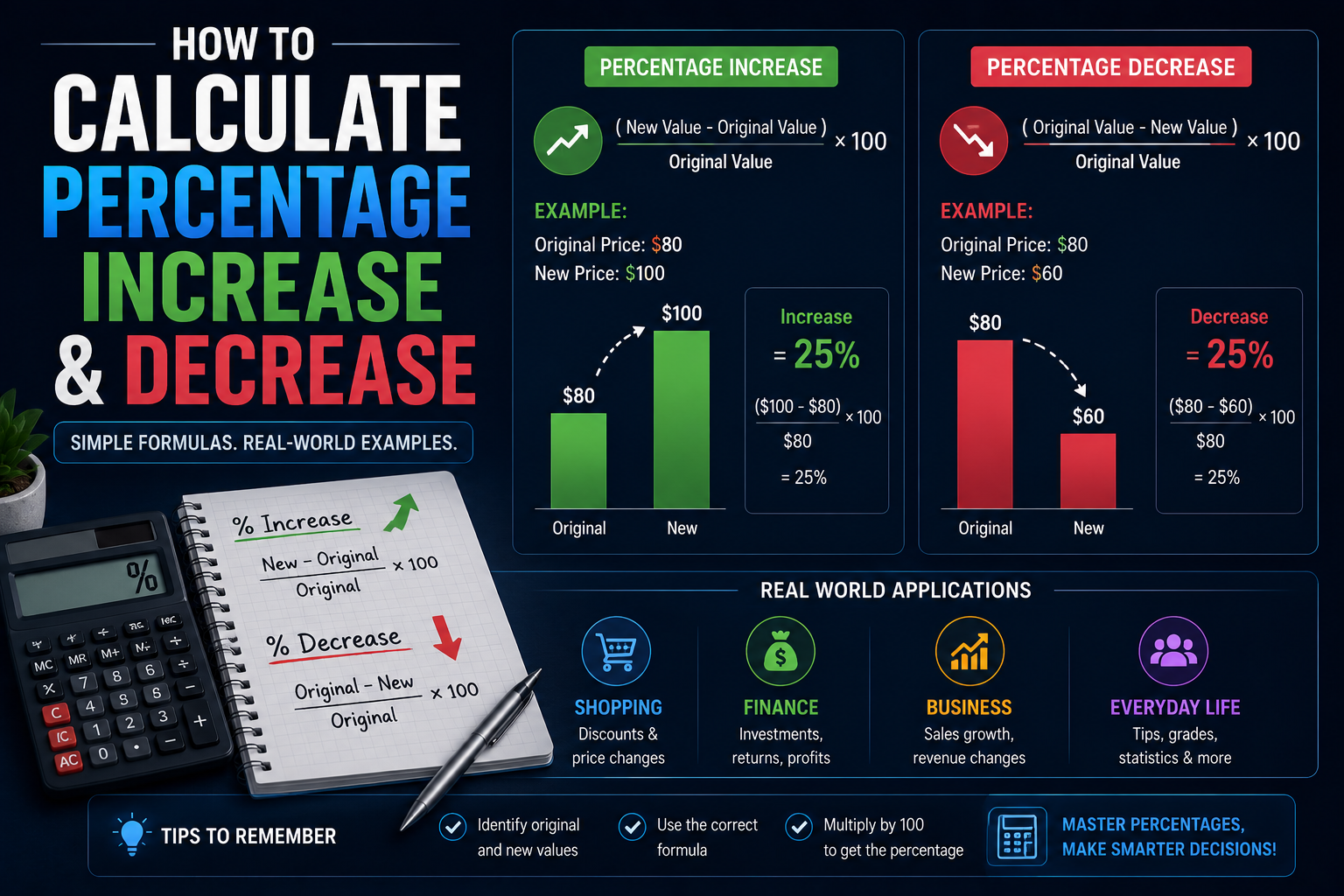
Percentage change is a way of expressing how much a value has increased or decreased relative to its original value. It is one of the most important concepts in finance, economics, data analysis, and everyday life. When you hear that "stock prices rose 5%" or "sales decreased by 10%," you are hearing about percentage change.
The Percentage Change Formula
The formula for percentage change is: ((New Value − Original Value) ÷ |Original Value|) × 100. The absolute value in the denominator ensures that the percentage change is meaningful even when the original value is negative.
Real-World Applications
Finance: Tracking investment returns, inflation rates, interest rate changes, and budget variances all rely on percentage change calculations.
Business: Sales growth, profit margins, market share changes, and customer retention rates are expressed as percentage changes.
Data Analysis: Comparing data across different scales, tracking trends over time, and normalizing data all use percentage change.
Use our percentage calculator to compute percentage changes quickly and accurately. Enter the original and new values, and the tool handles the calculation.
Related Tools
More Articles

DNS Record Types Explained
Learn every DNS record type including A, AAAA, CNAME, MX, TXT, NS, SOA, PTR, SRV...
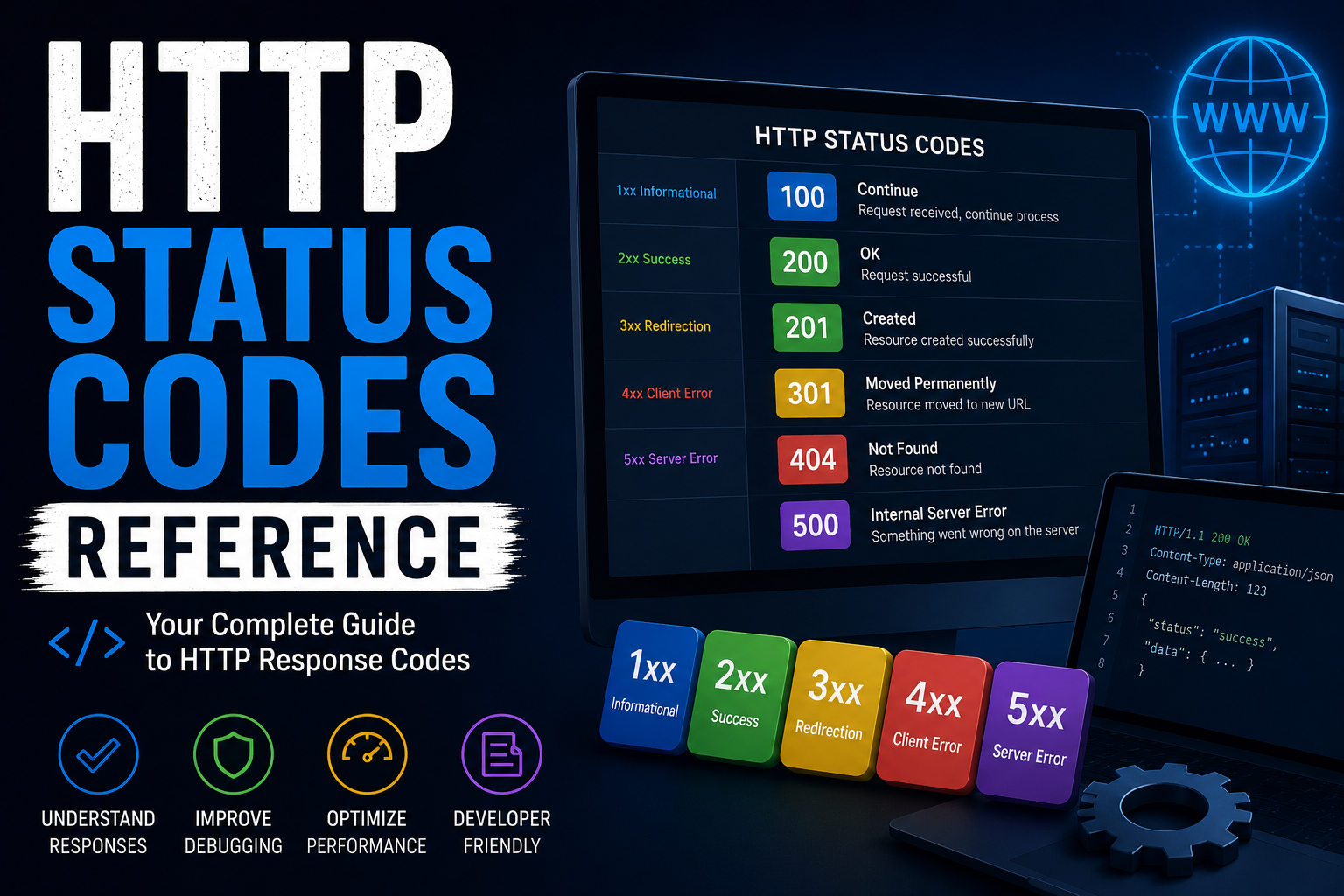
http-status-codes-reference
Free online http-status-codes-reference. Fast, accurate, and easy to use.

online-privacy-guide
Free online online-privacy-guide. Fast, accurate, and easy to use.
