Binary to Decimal Conversion: A Complete Guide
Learn something new today
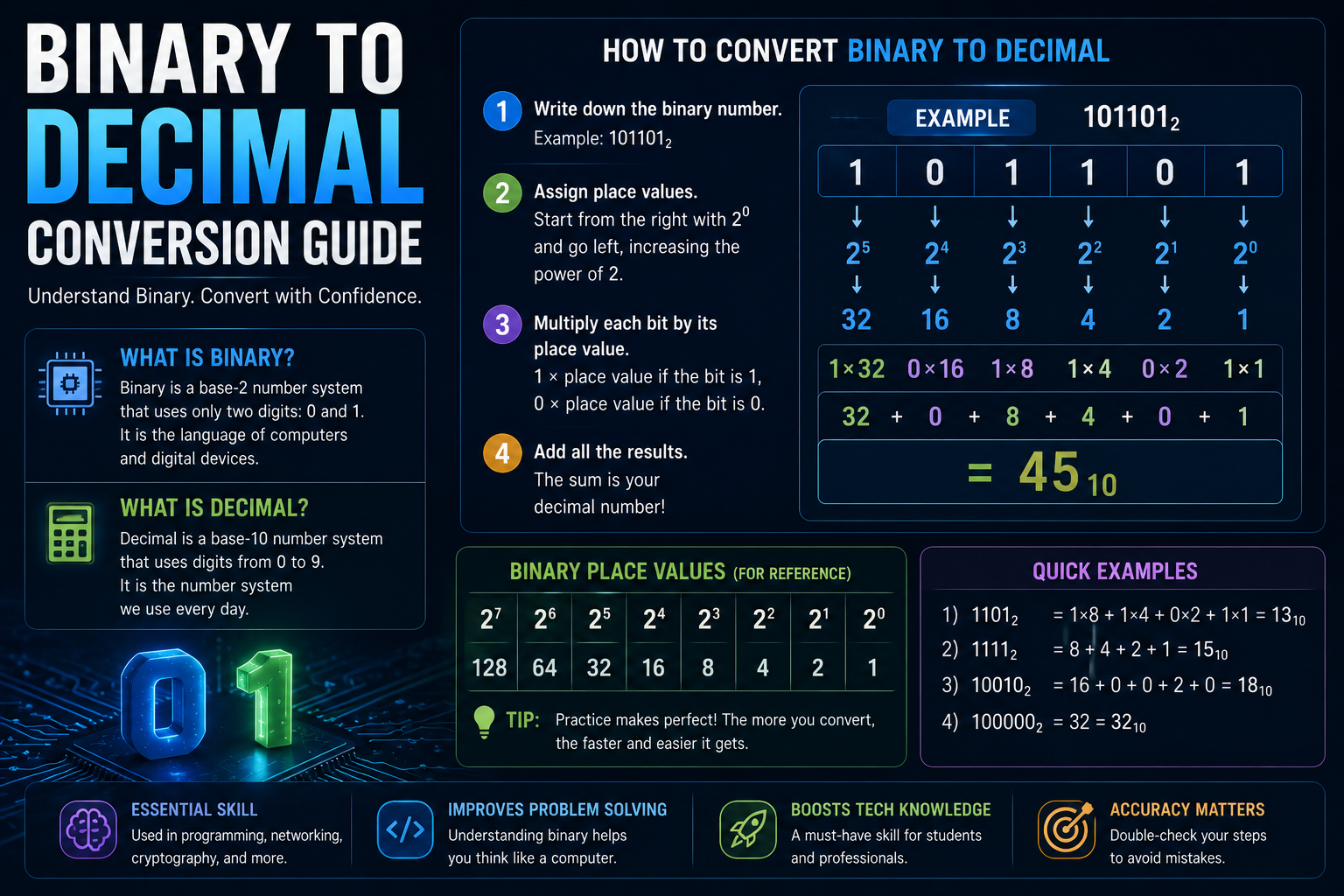
Understanding Binary Numbers
The binary number system uses only two digits: 0 and 1. This base-2 system is the foundation of all modern computing because it aligns perfectly with the two states of electronic switches (on/off, true/false). Every piece of data stored or processed by a computer — numbers, text, images, video, and executable code — is ultimately represented as binary.
Understanding binary is essential for computer science students, programmers working with low-level systems, network administrators configuring IP addresses and subnet masks, and anyone interested in how computers work at the fundamental level.
How to Convert Binary to Decimal
Binary numbers use the same positional notation as decimal numbers, but with base 2 instead of base 10. Each position represents a power of 2, starting from 2^0 on the right:
For example, the binary number 1011 represents: (1 × 2^3) + (0 × 2^2) + (1 × 2^1) + (1 × 2^0) = 8 + 0 + 2 + 1 = 11 in decimal.
To convert any binary number to decimal, write the binary digits, multiply each digit by its corresponding power of 2, and sum the results. Our binary to decimal converter handles this instantly, and the companion decimal to binary converter reverses the process.
Real-World Applications
IP addressing: IPv4 addresses are 32-bit binary numbers, typically written in dotted decimal notation (e.g., 192.168.1.1). Understanding binary helps network administrators work with subnet masks and CIDR notation.
Data storage: File sizes are measured in bytes (8 bits). Understanding binary helps explain why a kilobyte is 1024 bytes (2^10) rather than 1000 bytes.
Color values: In computer graphics, color components (red, green, blue) are often represented as 8-bit binary values (0-255). This relates directly to hexadecimal color codes used in web development.
Related Tools
More Articles
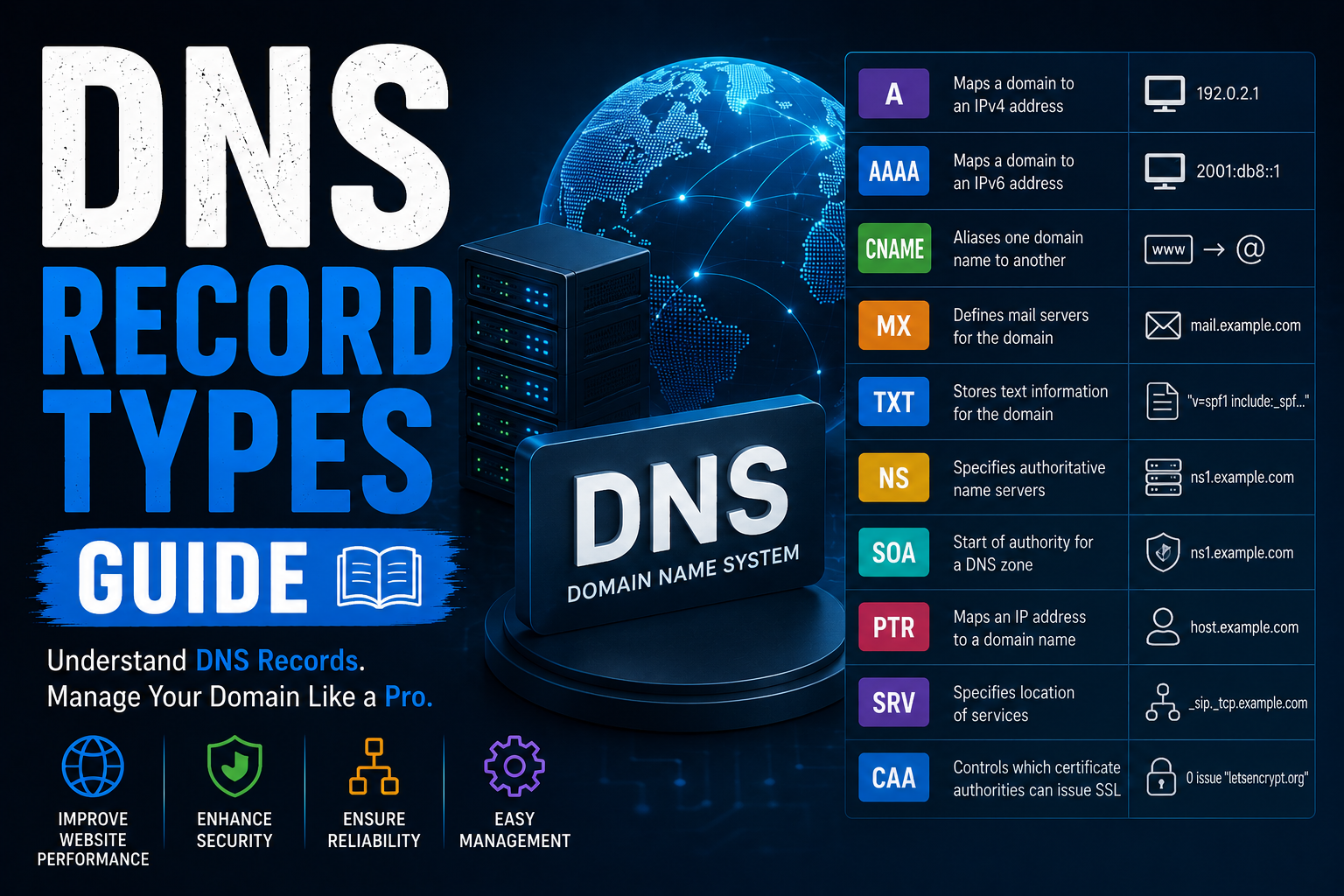
DNS Record Types Explained
Learn every DNS record type including A, AAAA, CNAME, MX, TXT, NS, SOA, PTR, SRV...
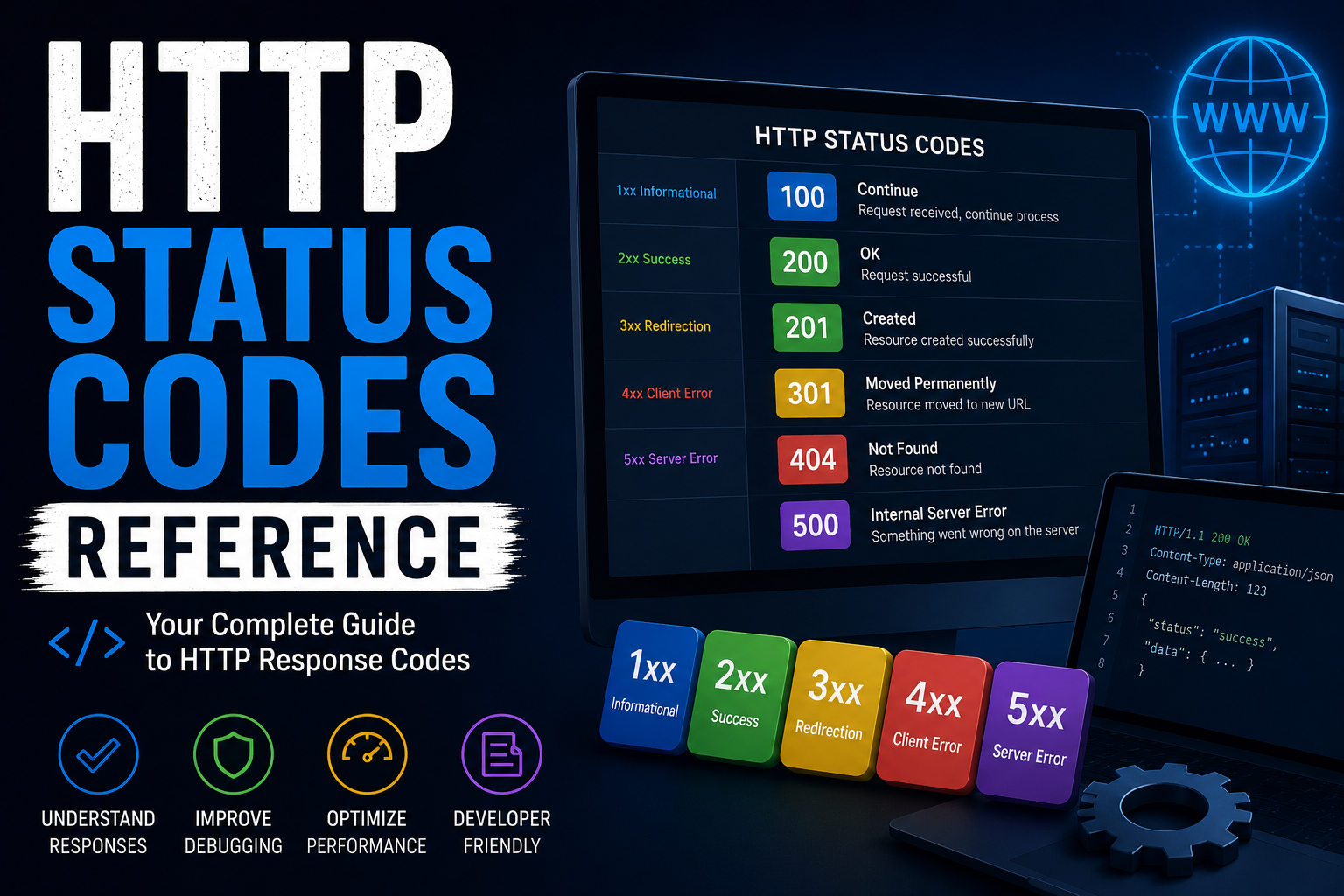
http-status-codes-reference
Free online http-status-codes-reference. Fast, accurate, and easy to use.

online-privacy-guide
Free online online-privacy-guide. Fast, accurate, and easy to use.
